Postcolonial Perspectives in a Globalized World: Reading Resistance, Identity, and Representation through Film

Postcolonial Perspectives in a Globalized World: Reading Resistance, Identity, and Representation through Film

This blog is written as a task assigned by the head of the Department of English (MKBU), Prof. and Dr. Dilip Barad Sir. Here are the links to the professor's research articles for background reading:


{getToc} $title={Table of Contents} $count={false}


Post-colonialism is a theoretical framework that examines the lasting impact of colonial rule on societies and cultures after the formal end of colonial empires. It looks at  colonial power structures, ideologies, and practices continue to shape the social, political, and economic realities of formerly colonized nations. Hifan, a term often associated with postcolonial studies, refers to the historical and cultural legacies of colonial domination that persist in the post-colonial era.

Whereas without Hifan The term "postcolonialism" is sometimes spelled without a hyphen, which refers to the theory that attempts to explain the condition of life after colonialism. The term is used to describe the cultural, political, social, and economic legacies of colonialism and imperialism.

[The so called white man's burden]

According to M.H.Abraham, "The critical analysis of the history, culture, literature, and modes of discourse that are specific to the former colonies..." The seminal work Orientalism [1978] by Edward Said provided shoulder on whom postcolonial critics stood. The "Eurocentric" discorse [idea by Micheal Foucault] of Orientalist as "Other", "Exotic", "inferior" was at the centre.

By Althusser's theory of ideology and Derrida's Deconstruction rapidly expanded the field.
1. Rejection of "Master narrative"
2. Destablish Eurocentric
3. Categorization of 'subject'

Edward Said in the interview with Sut Jhally University of Massachusetts-Amherst highlights what is Postcolonialism. 


Edward Said On Orientalism


Here is a video available on YouTube on The Myths of Globalizations by Peter Alfandary.

Globalisation reshaping postcolonial identities:- 


This article by Dr. Dilip Barad “Globalisation and the Future of Postcolonial Studies”, explores the intersection of globalisation and postcolonial studies, focusing on key events like 9/11, the rise of the New American Empire, and the Global War on Terror. It argues that globalisation is reshaping traditional postcolonial frameworks, emphasising the need for scholars to adapt by considering new concepts such as transnational networks, fluid identities, and the dissolution of geographic boundaries. Key scholars, including Thomas Friedman and Joseph Stiglitz, are discussed, along with critiques of globalisation’s impact on inequality and global governance. The article also addresses the role of higher education, the challenges posed by Market Fundamentalism, and the significance of the Fourth Industrial Revolution in shaping the future of global interactions. Additionally, the work highlights the importance of preserving dissent and critical inquiry in academic environments amidst political and corporate pressures.

(Barad)

Through this article, we understand how global capitalism can reinforce colonial-era patterns of exploitation and cultural dominance. 

Global capitalism often perpetuates economic dependencies established during colonial times. Many postcolonial nations remain reliant on foreign investment and export-oriented economies, which can make them vulnerable to global market fluctuations. Moreover, the spread of global brands, media, and consumer culture can lead to a degree of cultural homogenization. This process, often termed "McDonaldization" or "Coca-Colonization," can erode local cultural practices and traditions. Multinational corporations often seek cheap labor in postcolonial countries which can lead to exploitation of the people living there. 


Gl
obal capitalism also tends to create pockets of development within postcolonial societies, often leading to increased inequality. Urban centers may become integrated into the global economy while rural areas lag behind. In many postcolonial societies, global capitalism creates a new class of local elites who benefit from international trade, investment, and globalization. These elites often adopt Western lifestyles and values, distancing themselves from the majority population, and contributing to internal social inequality.


The examples of this can be seen in movies and books like "The Reluctant Fundamentalist" by Mohsin Hamid and "The Namesake" by Jhumpa Lahiri.


“The Reluctant Fundamentalist” (the novel and its film adaptation), examines the shifting identities of a Pakistani man in America before and after 9/11. This directly relates to the article's emphasis on how the 9/11 phenomenon reshaped global dynamics and perceptions.


"The Namesake" novel (also adapted into a film) explores the experiences of Indian immigrants in America and their children, touching on themes of cultural dislocation and identity formation that align with the article's discussion of postcolonial identities in a globalised world.


Globalization and Fiction


This article showcases the close relationship between globalization and how they are portrayed or captured within the fictional movies and literature. And how we can see this global phenomena through postcolonial lenses. 


In the wake of globalization, it is important to see how writers have captured these themes in their work. One such Pakistani writer is Mohsin Hamid, whose novel 'The Reluctant Fundamentalist' captures the essence of globalization, the 9/11 attacks, and market fundamentalism. The novel centers around an ambitious man, Changez Khan, who comes to the U.S. in search of better career opportunities.

Initially, Changez faces discrimination due to his Islamic background, but after some time, he earns recognition in his company and quickly rises to a prominent position. However, things begin to change after the 9/11 terror attacks. His colleagues start viewing Changez as a potential threat and connects him with terrorism, and his girlfriend, Erica, creates a photographic project that portrays him in a way that unsettles him. Changez feels that this project robs him of his true identity. He begins to lose his sense of belonging in the company and eventually decides to leave. He returns to Pakistan and pursues a career as a professor.

POSTCOLONIAL STUDIES IN THE ANTHROPOCENE: BRIDGING PERSPECTIVES FOR A SUSTAINABLE FUTURE


One of the most persistent and controversial topics of contemporary politics is the issue of the environment. Global warming has demonstrated the devastating effects of the industrial revolution and the unfettered pursuit of capital expansion.

The environment, and attendant topics such as ecofeminism, ecological imperialism, environmentalism,speciesism have all taken an increasingly prominent place in post-colonial thought because it has become clear that there is a direct connection between colonialist treatment of indigenous flora and fauna and treatment of colonized and otherwise dominated subjects and societies.


As part of our study on the intersection of postcolonialism and environmental crises, we also screened the documentary 'Anthropocene: The Human Epoch'.

 
Gayatri Chakravorty Spivak boldly assert that they have moved beyond the traditional postcolonial perspective, suggesting that "postcolonial is the day before yesterday"  Vandana Shiva, who highlights the historical connection between colonialism and the destruction of ecological diversity.  Then the question arises...


How does the evolving landscape of environmental studies affect the trajectory and relevance of postcolonial studies in today's world?


The Intersection of Postcolonial Studies and Environmentalism :

Vandana Shiva is helping to change this by talking about how colonialism and the environment are connected. Women's environmentalism also adds to the discussion, showing how nature and culture are linked in postcolonial places. All of this means we need to study environmental issues and postcolonial studies together to get a better understanding.

Spatial Amnesia and the Wilderness Obsession : 

Postcolonial scholars have approached environmentalism with caution because they are concerned that it may perpetuate narratives of the wilderness that erase the histories of colonization, dispossession, and environmental exploitation. 

 Environmental Activism vs. Multinational Corporations

In many parts of the world, especially in poor countries, there's a big clash between people who want to protect the environment and big companies. These companies want to make money, but their actions can harm the land and the people who live there. The battles show how powerful companies can have a bad impact on the environment and the communities where they operate.

Textile industry in Bangladesh : 


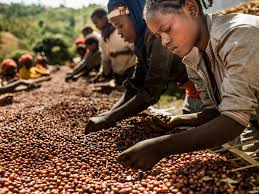
African Coffee Plantations : 


Indian Dairy Industry :


Trading economics shared the chart of the exportation of the Dairy products of India. 


Internal Colonialism in the Decolonized World : 

In many decolonized nations, the struggles of indigenous peoples exemplify the ongoing presence of internal colonialism. Indigenous communities, often pushed to the margins of society, continue to face dispossession and disenfranchisement as their ancestral lands are encroached upon for resource extraction and economic development.


The Narmada Bachao Andolan (NBA) is an Indian social movement that was started in 1985 to oppose the construction of large dams on the Narmada River. The NBA is led by activists like Medha Patkar and Baba Amte. The movement's main goals are to protect the environment and the rights of people who would be displaced by the dams. The "Displacement" ratio was higher than one can think, still the project was successful, compnies and govermnet won the case in the suepreme court.


Maoists are fighting against both the mining companies and the government. They want to protect the land and the rights of the people who live there.Arundhati Roy says that these tribal people have been fighting for their land for a very long time, even before the Maoists came along.


Tamil Nadu government announced the construction of a pedestrian bridge linking Vivekananda Rock memorial and Thiruvalluvar statue. This is reveling that there is conflict of Vivekanad memorial and the satue. The enchroching of the water and making a bridge between this is another harming the environment through the anthropocentric view.

Heroes or Hegemony 

This article, "Heroes or Hegemons? The Celluloid Empire of Rambo and Bond in America's Geopolitical Narrative" by Dr. Dilip Barad examines how Hollywood films, particularly the “Rambo” and “James Bond” franchises project American dominance and shape global perceptions of U.S. hegemony. These films often reinforce narratives that align with U.S. geopolitical interests, particularly during the Cold War and the era of globalisation.


Films like “Rambo” Franchise depict the U.S. as morally justified in its military actions. In “Rambo: First Blood Part II”, the Vietnam War is revisited with a narrative that suggests the U.S. seeks redemption for past failures, framing American soldiers as heroes despite their government's betrayal. In “Rambo III”, Rambo supports the Mujahideen against the Soviet Union, aligning with U.S. policies during the Soviet-Afghan War. These narratives portray the U.S. as a global liberator, fighting against the evils of communism and other threats.


The “James Bond” series, while a British creation, often aligns with Western, particularly American, geopolitical interests. For example, “The Living Daylights” features Bond assisting Afghan rebels, similar to Rambo's role in “Rambo III”. Through widespread distribution, these films propagate American values and perspectives globally, subtly influencing audiences to view the U.S. and its allies as defenders of freedom and democracy.

The success of these franchises also highlights America's dominance in global entertainment, contributing to cultural and economic hegemony. Hollywood's ability to craft compelling narratives that resonate globally has solidified its role as a tool of soft power, shaping perceptions of American power and legitimacy worldwide.

(Barad)


From a postcolonial perspective, these films can be critiqued for reinforcing hegemonic narratives that marginalise non-Western perspectives. They often portray the U.S. and its allies as the moral centre of global conflicts, with other nations and peoples depicted as either villains or needing rescue. This perpetuates a binary of Western superiority versus non-Western inferiority, overlooking the complexities of global power dynamics and the agency of other nations. Additionally, the focus on American redemption and heroism in films like “Rambo” ignores the broader historical and geopolitical contexts, such as the impact of U.S. interventions on the countries involved. The simplistic portrayal of these conflicts as battles between good (the U.S.) and evil (communism, terrorism) reinforces a worldview that legitimises American dominance.


“Indiana Jones” movies are another example where Hollywood films project American dominance and reinforce hegemonic ideals, often aligning with U.S. geopolitical narratives.

Throughout the series, Indiana Jones often seeks to recover ancient artifacts from non-Western cultures, which are depicted as needing protection from either corrupt forces or local authorities who are seen as unworthy or incapable of safeguarding their own heritage. This reflects a colonial mindset where Western characters are portrayed as the rightful protectors of global cultural heritage, implying a kind of cultural superiority.

These films often position their hero against global threats that align with historical American adversaries, particularly the Nazis and, later, the Soviets. In “Raiders of the Lost Ark” and “Indiana Jones and the Last Crusade”, Indiana Jones battles Nazi forces, aligning with the broader Western narrative of World War II where the U.S. is portrayed as a liberating force against fascism. In “Indiana Jones and the Kingdom of the Crystal Skull”, the enemy shifts to Soviet agents, reflecting Cold War anxieties.


These films often portray non-Western cultures in a simplistic and exorcized manner, feeding into Orientalist stereotypes. These cultures are frequently depicted as mysterious, dangerous, or backward, with Indiana Jones serving as the enlightened Westerner who navigates these worlds with superior knowledge and skill. This can be seen in “Indiana Jones and the Temple of Doom”, where Indian culture is depicted through a lens of dark mysticism and savagery, reinforcing negative stereotypes.


This series, like other Hollywood films, perpetuates American hegemonic ideals by portraying an American hero who not only survives but thrives in foreign lands, often at the expense of local cultures. The films reinforce notions of American cultural and moral superiority, while their depiction of non-Western societies reflects and perpetuates colonialist attitudes. From a postcolonial perspective, these narratives can be critiqued for their simplistic portrayal of global cultures and for reinforcing a worldview that privileges Western dominance over others.


Reimagining Resistance: The Appropriation of Tribal Heroes in Rajamouli's RRR


The article discusses the portrayal of historical figures Alluri Sitarama Raju and Komaram Bheem in S. S. Rajamouli's film "RRR". While these characters are known for their resistance against local oppression within their tribal communities, the film frames them within a nationalistic narrative focused on British colonialism. This perspective overlooks their actual struggles for land, water, and forests.

Movies should honor the rich history of tribal people's struggles instead of glorifying narratives for entertainment. If such histories aren’t recorded in films or literature, there's a risk that future generations will forget their efforts. Literature must address these everyday issues critically, encouraging writers to raise important questions about these overlooked topics.


The Narmada Bachao Andolan was a social protest led by Medha Patkar and various tribal communities in response to the passing of a bill to build a dam on the Narmada River. While building the dam might seem beneficial for providing drinking water and irrigation, this primarily benefits the state of Gujarat and overlooks the impact on local tribal people. Their homes and livelihoods are directly affected by the river's waters. Those who would be impacted by the dam's construction were not informed about the project; they were simply offered rehabilitation.

"Displacement… is a very inadequate word that conveys nothing of its true meaning. Displacement is not about moving…(It) is about losing a river. Losing access to clean, safe, drinking water…losing land that is watered richly…losing the grass that your herds grazed on. Losing your cattle. Losing the milk that came from your cattle…losing honey and herbs…losing the right to protest when somebody in a uniform shows up to set fire to your home. What else was left to lose?" 

Many people were forced to leave their homes because of a dam project. This wasn't just moving it changed their lives in many ways. A famous Gujrati writer named Dhruva Bhatt wrote a book about the Narmada River and the people who lived there. However, his book didn't talk much about the struggles of the people who fought to save the river.

Nowadays, writers are more aware of environmental problems and the difficulties faced by marginalized groups. They are writing about these issues and trying to understand them from a different perspective.

References:

Bahukhandi, Prem. “Joshimath crisis is a warning from the Himalayas.” Down To Earth, 19 January 2023, https://www.downtoearth.org.in/urbanisation/joshimath-crisis-is-a-warning-from-the-himalayas-87229.

Barad, Dilip. “GLOBALIZATION AND THE FUTURE OF POSTCOLONIAL STUDIES.” researchgate.net, ResearchGate, October 2022, https://www.researchgate.net/publication/376374570_GLOBALIZATION_AND_THE_FUTURE_OF_POSTCOLONIAL_STUDIES.

Barad, Dilip. “POSTCOLONIAL STUDIES IN THE ANTHROPOCENE: BRIDGING PERSPECTIVES FOR A SUSTAINABLE FUTURE” researchgate.net, https://www.researchgate.net/publication/376374708_POSTCOLONIAL_STUDIES_IN_THE_ANTHROPOCENE_BRIDGING_PERSPECTIVES_FOR_A_SUSTAINABLE_FUTURE.

Barad, Dilip. “Heroes or Hegemons? The Celluloid Empire of Rambo and Bond in America's Geopolitical Narrative:,  researchgate.net, https://www.researchgate.net/publication/383415195_Heroes_or_Hegemons_The_Celluloid_Empire_of_Rambo_and_Bond_in_America's_Geopolitical_Narrative.

Barad, Dilip. “Reimagining Resistance: The Appropriation of Tribal Heroes in Rajamouli's RRR”, researchgate.net, https://www.researchgate.net/publication/383603395_Reimagining_Resistance_The_Appropriation_of_Tribal_Heroes_in_Rajamouli's_RRR.

Barad, Dilip. “GLOBALIZATION AND FICTION: EXPLORING POSTCOLONIAL CRITIQUE AND LITERARY REPRESENTATIONS”, researchgate.net, https://www.researchgate.net/publication/376371617_GLOBALIZATION_AND_FICTION_EXPLORING_POSTCOLONIAL_CRITIQUE_AND_LITERARY_REPRESENTATIONS.

Nitnaware, Himanshu. “Activists allege thousands of trees felled in Hasdeo for coal mining.” Down To Earth, 4 January 2024, https://www.downtoearth.org.in/forests/activists-allege-thousands-of-trees-felled-in-hasdeo-for-coal-mining-93718.